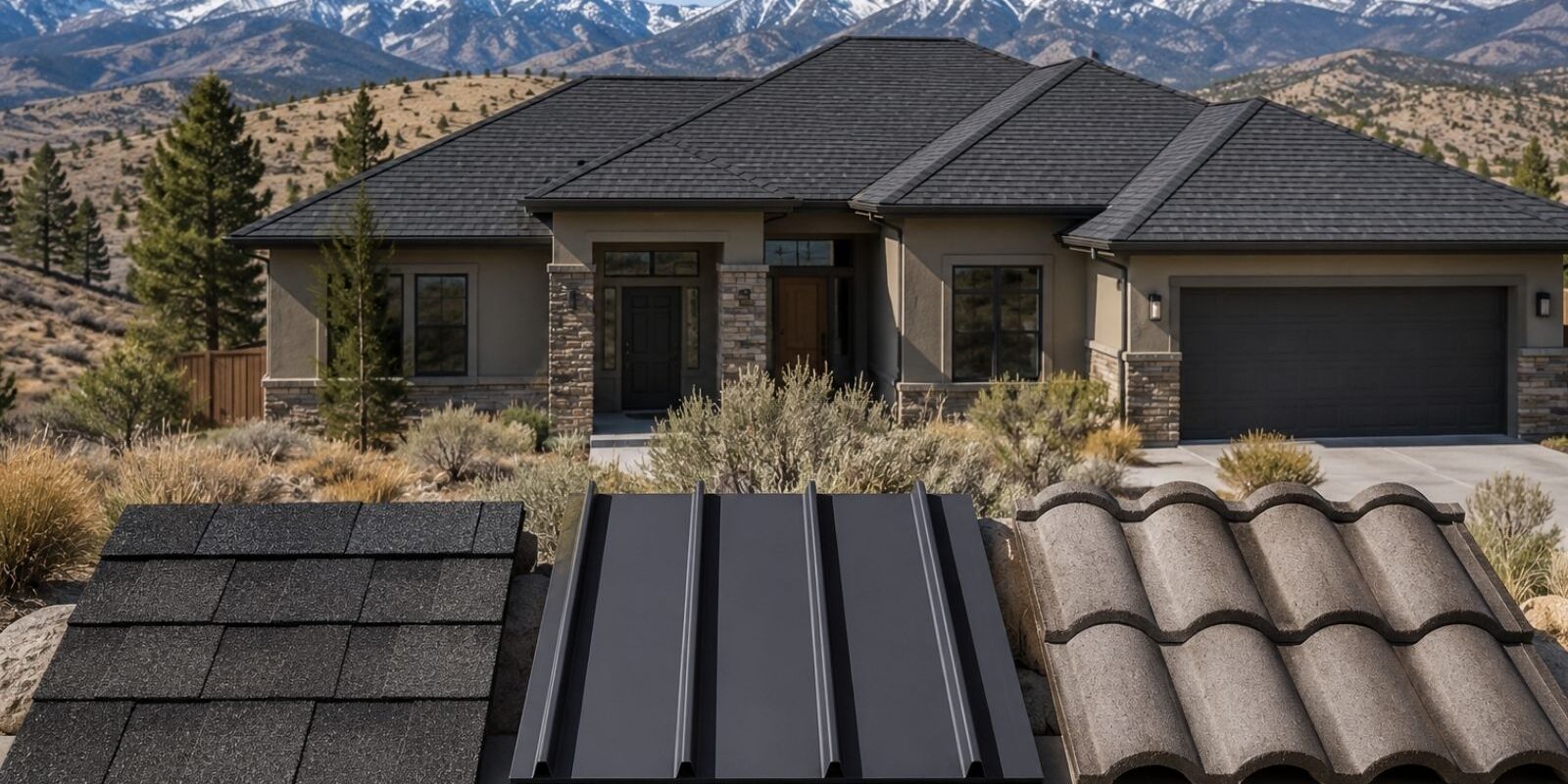
There’s no single roofing material that’s considered the best for every Northern Nevada home. Architectural asphalt shingles are usually the best overall value, while standing-seam metal roofing is a better choice for homeowners who prioritize longevity and demanding weather conditions. Tile and synthetic roofing may also be suitable depending on the home, but the best recommendation depends on location, elevation, roof design, budget, and wildfire exposure.
What Does a Northern Nevada Roof Need to Withstand?
Northern Nevada’s climate can be quite tough on roofing materials, as homes are no strangers to intense sunlight, strong winds, snow, ice, and many other demanding weather conditions. This makes a generic, nationwide recommendation insufficient, because it’s heavily dependent on these weather conditions (as well as where the home is located, its roof design, elevation, etc). Below are a few examples of specific weather conditions that a Northern Nevada roof needs to withstand.
Intense Sun and UV Exposure
Northern Nevada gets plenty of sunshine, and the combination of high-altitude sun and dry conditions can be very demanding on a roof. This is mainly because of cumulative years of UV exposure, which can gradually cause some roofing materials to fade, dry out, become brittle, and deteriorate.
This is why it’s important to consider the quality of the roofing material and product at hand. Look at the color, finish, and reflective options, the latter of which may absorb less heat during the summer months.
Large temperature swings
It’s not uncommon for a roof to experience very cold overnight temperatures, strong afternoon heat, and temperature fluctuations in between. This constant expansion and contraction can place stress on roofing materials and their subsequent components like seams, fasteners, and flashing. To accommodate this kind of thermal movement and reduce the risk of premature wear and tear, it’s important to consider proper installation techniques and choose roofing products designed to handle these conditions.
Wind
Strong winds are another demanding weather condition that Northern Nevada homeowners often face, especially in higher elevations and more exposed areas. This can be problematic because wind gusts can lift or damage roofing materials when they’re not properly rated or installed. For this, homeowners should consider the wind rating of the roofing material, as well as implement correct fastening techniques.
Snow and ice
Snow and ice conditions vary greatly across Northern Nevada, as a home in Reno or Carson City may get far less snow and ice than a home in the surrounding foothills or higher-elevation communities.
But the amount of snow is just one aspect to consider, alongside roof slope, underlayment, ventilation, flashing, ice protection, and the specific surface material. These can all affect how well the roofing system handles winter weather, though in some cases, snow retention should also be considered to help prevent accumulated snow from suddenly sliding off the roof.
Wildfire and Windblown Embers
Homeowners who live near open land or in the wildland-urban interface are more susceptible to wildfires and even windblown embers. This is why it’s important to consider the fire rating and performance of the entire roofing assembly, rather than just the visible roof covering. In fact, the University of Nevada, Reno Extension specifically recommends addressing roofs, roof edges, vents, gutters, and other exterior components to reduce a home’s vulnerability to wildfires.
These aren’t just theoretical weather concerns, as Reno’s long-term climate data shows approximately 121.9 nights per year at or below freezing and about 20.9 inches of annual snowfall, while a 70 mph wind gust was recorded in 2025, highlighting the range of conditions that Northern Nevada roofs need to withstand. National Weather Service
Northern Nevada Roofing Materials at a Glance
With so many roofing materials available, it can be difficult to narrow down the best option for your home. So here’s a quick comparison table of different materials and their advantages and limitations.
| Material | Best for | Primary advantage | Main limitation |
| Architectural asphalt shingles | Most Northern Nevada homes | Strong value and broad design selection | Shorter service life than premium systems |
| Standing-seam metal | Long-term performance and higher elevations | Durable, fire-resistant, and effective at shedding snow | Higher initial investment |
| Concrete or clay tile | Homes designed for tile | Longevity and distinctive appearance | Weight and breakage concerns |
| Synthetic roofing | Slate or shake appearance without comparable weight | Attractive and potentially impact-resistant | Quality varies by manufacturer |
| Natural slate | High-end, structurally suitable homes | Exceptional longevity and fire resistance | Very heavy and expensive |
| Wood shake | Rustic appearance | Natural character | Fire, maintenance, and insurance concerns |
Architectural Asphalt Shingles: Best Overall for Many Homes
Architectural asphalt shingles are one of the most common roofing choices for homes in Reno, Sparks, Carson City, and surrounding Northern Nevada communities because they’re affordable, durable, and versatile.
They’re available in a wide range of colors and styles and can be designed to withstand harsh weather conditions like wind, snow, ice, extreme heat, and more. And compared to more expensive materials, architectural shingles can also provide reliable protection without requiring the larger upfront investment of more premium roofing systems.
Here are three types to consider:
- Three-tab shingles, which are a basic, budget-friendly option with a simple, uniform appearance.
- Architectural shingles are a thicker, dimensional option that offers more durability and design variety than three-tab shingles.
- Premium designer shingles are higher-end shingles designed to create the look of materials like slate or wood with the benefits of asphalt roofing.
Of course, not all shingles will perform well in local weather, which is why it’s important to look for products with an appropriate wind rating (especially if the home is in an exposed or higher-elevation area) and a complete Class A assembly. This means that the roofing assembly has been tested for the highest level of fire resistance, which is crucial for homes in wildfire-prone environments.
Now, there are some limitations to consider, including prolonged UV exposure, strong winds, and aging, which can all eventually take their toll and degrade the shingles over time. But if you’re looking for a practical combination of cost, appearance, and performance, architectural asphalt shingles remain the best overall value for many Northern Nevada homes.
For a closer look at the different types of shingles available, visit Mountain Vista’s guide to Types of Roofing Shingles.
Standing-Seam Metal Roofing: Best for Long-Term Performance
For those who are willing to make a larger upfront investment, standing-seam metal roofing can be one of the most durable roofing options for several reasons, including:
- Resistant to weather-related wear, as properly installed metal roofing is highly resistant to cracking, deterioration, and other forms of wear and tear.
- Long-term performance. Unlike some materials that can become brittle or deteriorate with age, metal can maintain its performance for many years to come.
- Effective snow shedding. The smooth surface of a standing-seam metal roof allows snow to slide off more easily, which can help prevent heavy accumulation on the roof.
- Helps manage summer heat, especially since metal roofing can be paired with reflective coatings or lighter-colored finishes that absorb less solar heat.
Metal roofing also has an advantage when it comes to wildfire concerns because metal is a noncombustible material, which can contribute to a Class A fire-rated roof assembly. It’s worth noting, though, that a Class A rating applies to the complete tested roofing assembly, not just the metal panels.
Now, there are some drawbacks to consider, which include:
- Higher upfront costs, as standing-seam metal roofing usually requires a larger initial investment than asphalt shingles.
- While standing-seam metal roofing offers effective snow shedding, snow retention devices may be needed to prevent falling snow from damaging landscaping or property or creating a safety hazard for people below.
- Installation quality is very important, as metal roofing is made up of several interconnected components, including panels, seams, flashing, fasteners, and roof penetrations. These all need to be properly placed and installed to prevent leaks and premature damage to the roofing system.
So, in short, standing-seam metal roofing is the best premium option for longevity, wildfire-conscious construction, and certain high-elevation homes.
For more information about metal roofing options, see Mountain Vista’s guide to Metal Roofing.
Tile Roofing: Durable but Not Right for Every Structure
There are two main types of tile roofing to consider: clay and concrete. While both are known for providing strong resistance to sun, weather, and fire conditions, they differ in their appearance, construction, and cost, as well as other factors listed below.
Clay Tile Roofing
Clay tile is made from natural clay that’s shaped and fired at high temperatures and is available in many different colors and styles. It’s durable, naturally resistant to fire, and can handle long exposure to sunlight and other harsh weather conditions, though it’s significantly more expensive and has a heavier weight, which means the home’s structure needs to be able to support it.
Concrete Tile Roofing
Concrete tile is made from a mixture of cement, sand, and water and offers much of the same benefits as clay tile, such as being fire- and weather-resistant, durable, and available in many colors and styles. While it’s generally more affordable than clay, it’s also quite heavy and can be susceptible to cracking. It also tends to absorb more water than clay, which may contribute to gradual weathering over time.
All this said, tile may not be the right fit for every home, as there are a few other important factors to consider, such as:
- Structural suitability. Both clay and concrete tiles are significantly heavier than asphalt shingles, so the home’s roof structure should be evaluated before installation, especially when replacing a lighter roofing material with tile.
- Potential for breakage. Despite their durability, individual tiles can still crack or break from foot traffic or impact, so any maintenance that requires walking on the roof should be handled very carefully.
- Architectural compatibility. Tile can add flair and character to certain homes, especially Spanish, Mediterranean, and Southwestern-style homes. However, it may not complement every architectural style, so the home’s existing design should be taken into consideration.
In short, both clay and concrete tiles boast long-term durability and can withstand years of exposure to the elements, especially in sunny, dry climates like Northern Nevada. Therefore, it’s a strong choice for homes designed or verified to support it.
Synthetic Slate and Shake: Best for a Premium Look Without the Weight
If you love the look of natural slate or wood shake but aren’t as enthusiastic about the weight, cost, or maintenance that can come with those materials, synthetic roofing can offer a nice middle ground. They’re made from engineered materials designed to mimic the appearance of natural roofing, which can give a home a more high-end look while often weighing much less than their natural counterparts.
Another big advantage is durability, as many synthetic roofing products are designed to withstand impact, wind, and other harsh weather conditions. However, performance and quality can differ from one manufacturer to another. Just because two products are marketed as “synthetic slate” or “synthetic shake” doesn’t mean they’ll perform the same way. That’s why it’s crucial to look beyond appearances and consider the following:
- Product testing
- Impact ratings
- Fire ratings
- Warranties
- Manufacturer specifications
- Local installation history
Verdict: Synthetic slate and shake are worth considering when appearance is a major priority, though product quality and ratings should be carefully evaluated.
Are Wood Shakes a Good Choice in Northern Nevada?
There’s a reason why wood shakes have remained popular for mountain homes and rustic-style properties. Their natural texture and warm appearance can give a home a lot of character, but they also come with a few tradeoffs that homeowners should consider.
One of these is maintenance, because unlike many modern roofing materials, wood is a natural material that continues to weather over time. It usually requires more upkeep to help prevent problems such as moisture damage, splitting, warping, and general deterioration, which poses a problem when faced against Northern Nevada’s harsh climates.
There’s also a wildfire risk because untreated wood is combustible, which makes it unsuitable for homes in wildfire-prone areas or near the wildland-urban interface. Depending on where the home is located, local building codes and insurance requirements may also limit the use of wood roofing.
Now, fire-treated wood does boast improved fire performance, but treated does not equal fireproof. A product’s fire rating is based on a specific tested roofing assembly and installation, so homeowners shouldn’t assume that any fire-treated wood shake will provide the same protection as a noncombustible material like metal or tile. As an alternative, homeowners can opt for synthetic shake roofing, which can recreate much of that natural, rustic appearance while offering different levels of fire and weather resistance.
Verdict: Wood shakes are usually not the first recommendation for wildfire-prone areas, but they can still be a suitable option for the right home and location, provided that homeowners weigh their maintenance needs against the Northern Nevada climate and any local requirements.
Which Material Is Best for Your Particular Home?
There really isn’t a one-size-fits-all answer, because Northern Nevada is a patchwork of different elevations and climates. So instead of asking what the best roofing material is, it’s better to ask “What’s the best roofing material for my home?” Here’s a quick breakdown of which options tend to make the most sense for your priorities:
- Best overall value: Architectural asphalt shingles. They’re versatile enough for a wide range of homes and offer dependable protection without the larger upfront price tag of premium materials.
- Best long-term investment: Standing-seam metal. Its resistance to cracking, weather-related wear, and fire can make the higher upfront cost worthwhile, especially if long-term durability is high on your priority list.
- Best for heavy snow areas: Metal (usually). Snow can be a major factor in some parts of Northern Nevada, and a metal’s smooth surface can help accumulated snow slide off the roof rather than remain in place, though this may create safety hazards if snow retention devices aren’t implemented.
- Best for wildfire-conscious construction: A properly designed Class A roof assembly, which provides the highest level of fire resistance under the applicable roofing classification system.
- Best for a Spanish or Southwestern-style home: Concrete or clay tile. Few materials complement Spanish, Mediterranean, and Southwestern architecture quite like tile. Beyond its appearance, concrete and clay tile also offer strong durability and fire resistance.
- Best for a slate or shake appearance: Quality synthetic roofing, which can give your home a high-end appearance while potentially offering different levels of impact and weather resistance.
- Best for a limited budget: Architectural asphalt shingles, which boast a strong combination of price, performance, and curb appeal without the large investment.
But ultimately, it’s about the location. Cities like Reno, Incline Village, Fernley, Minden, and Virginia City don’t all experience the same combination of elevation, snow, wind, temperature changes, and wildfire exposure. Therefore, they should not automatically receive identical roofing recommendations.
The Roof System Matters as Much as the Material
It’s easy to focus on the shingles, metal, or tile you can see from the street, but the roofing material is only one part of the whole system. A well-designed roof should account for all of the following:
- Roof deck, which provides the foundation for the roofing system and should be in good condition before installation.
- Underlayment, which adds another layer of protection against moisture beneath the roof covering.
- Ice and water protection, which helps protect vulnerable areas from moisture caused by snow and ice.
- Flashing, which directs water away from roof edges, walls, chimneys, vents, and other openings.
- Attic ventilation, which helps manage heat and moisture throughout the year.
- Fastening, which helps roofing materials withstand strong winds and other weather conditions.
- Valleys and penetrations, which require careful sealing to help prevent leaks.
- Gutters and drainage help to move rainwater and melting snow away from the roof and home.
- Manufacturer-approved installation and specifications should be followed for the specific roofing material in question.
- Local codes and wildfire requirements, such as building codes, wildfire exposure, elevation, and other site conditions, should all be taken into consideration for the most appropriate roofing system.
In short, a premium material can’t make up for a poorly designed or installed roof. The entire system needs to be built to work together to suit the home’s specific conditions.
How Mountain Vista Helps Homeowners Choose
Choosing a new roof can feel a lot more complicated than simply picking a color or a type of material. While there are plenty of options, what works beautifully for one home might not make much sense for another. That’s where a little expert guidance can go a long way. At Mountain Vista, we help homeowners understand their options, weigh the tradeoffs, and find a roofing system that actually fits their home. That process starts by looking at a few key factors:
- We start with the home and take a look at the existing roof and supporting structure to understand its condition and what it can accommodate.
- We consider the surroundings, such as elevation, roof pitch, sun and wind exposure, snow, and nearby vegetation, which can all influence how a roof needs to perform.
- We explore all of your options, including comparing appropriate materials and roofing systems.
- We talk through the tradeoffs, because every material has its pros and cons, including cost, longevity, maintenance, weather performance, appearance, etc.
- We find the right fit. Instead of pushing the most expensive option, our goal is to recommend a roofing system that makes sense for you and your home.
So ultimately, choosing the right roof is about finding the right balance between your home’s needs and your priorities, and Mountain Vista is here to help you make that decision with confidence.
Frequently Asked Questions
What is the best roofing material for Reno, Nevada?
Architectural asphalt shingles offer the best all-around balance of cost, appearance, and performance, because they’re practical and can handle many of the conditions that Northern Nevada throws at them. That said, homeowners who are looking for maximum longevity, stronger weather performance, or wildfire considerations may find standing-seam metal to be a better fit. But the best choice ultimately comes down to your specific home, where it’s located, elevation, the surrounding environment, and other factors.
Is a metal roof better than shingles in Northern Nevada?
Not necessarily. Metal roofing has an edge when it comes to long-term durability and can be especially appealing in areas with heavy snow, strong winds, or wildfire concerns. Asphalt shingles, on the other hand, are generally more affordable upfront and offer plenty of styles to choose from. Think of it less as one material being “better” and more as choosing between different priorities: metal for premium, long-term performance and shingles for practical value.
What roofing material lasts the longest in Nevada?
If longevity is the main goal, metal, clay tile, concrete tile, and natural slate can all offer impressive long-term durability. But there’s a catch: the material with the longest potential lifespan isn’t automatically the best choice for every home, as things like weight, structural requirements, installation quality, maintenance, and upfront costs should all be considered.
What is the best roof for heavy snow?
Metal roofing is usually the go-to choice for homes that regularly deal with heavy snow. Its smooth surface allows snow to shed more easily, which helps prevent accumulation on the roof. But factors like roof pitch, structural capacity, snow load, flashing, underlayment, and drainage all play a key role in determining how well a roof handles winter weather.
If snow is likely to slide off the roof and onto walkways, driveways, landscaping, vehicles, or other areas below, then snow retention devices may be needed to mitigate such hazards.
What type of roof is best for wildfire-prone areas?
For wildfire-prone areas, a properly designed Class A roof assembly is one of the most important things to look for. Metal, tile, and certain asphalt shingles can all contribute to a Class A assembly, but the roofing material alone doesn’t determine the overall fire rating. The rating applies to the complete roofing assembly, including components such as the roof deck and underlayment.
Are asphalt shingles suitable for Northern Nevada?
Yes, architectural asphalt shingles are a practical choice because they offer a nice middle ground between affordability, appearance, and performance. The key is choosing a product that is appropriately rated for local conditions and having it installed according to the manufacturer’s specifications.
Does a dark roof make a Nevada home hotter?
It definitely can. Dark roofing materials generally absorb more solar heat than lighter or more reflective surfaces, which can increase heat gain through the roof. However, other factors play a role too, such as insulation, ventilation, roof construction, and the roofing material. If summer heat is a concern, homeowners can consider lighter-colored or reflective roofing finishes that are designed to absorb less solar energy.
Can my home support a tile or slate roof?
Maybe, but it’s not something you want to guess about. Tile and natural slate are significantly heavier than asphalt shingles, so the home’s roof structure needs to be capable of supporting the additional load. A professional can evaluate the existing structure and determine whether it can safely support the material or if modifications would be needed.
Do I need a Class A roof in Northern Nevada?
A Class A roof assembly is important for homes in wildfire-prone areas, especially for properties near open land or within the wildland-urban interface. Whether a specific Class A assembly is required depends on the home’s location and applicable local and building codes.
How does roof pitch affect the best material choice?
A steeper roof can help rain and snow shed more quickly, while lower-slope roofs may require certain roofing materials and installation methods. Pitch also affects how quickly accumulated snow can slide from the roof, which is important when considering nearby walkways, driveways, landscaping, and other areas below. In short, the best roofing material isn’t just about what’s on top of the roof, but how the entire roof is designed to handle local and property conditions.
The Right Roof Depends on More Than the Material
While there isn’t one roofing material that’s perfect for every Northern Nevada home, architectural asphalt shingles offer the best combination of cost and performance for many homeowners, while standing-seam metal can be a worthwhile investment for those who prioritize long-term durability, fire resistance, and other harsh weather conditions.
But the best choice isn’t necessarily about the most expensive or the longest-lasting roofing material. It’s about the big picture, which is a holistic view of your home’s location, elevation, surrounding environment, your budget, and specific priorities, all of which determine the final choice for you and your home.
Not sure which roofing system is right for your Northern Nevada home? Mountain Vista can evaluate your roof, location, and priorities to help you understand which options make the most sense for your property.
Explore our Residential Roofing, Metal Roofing, and Roof Replacement services, or Get Started with a consultation today.
About the Author: Aaron Galloway
Aaron Galloway, founder of Mountain Vista Roof Systems and a Nevada native, provides homeowners across Northern Nevada with expert roofing, gutters, and skylight solutions, using durable materials as a Malarkey Premium Installer.