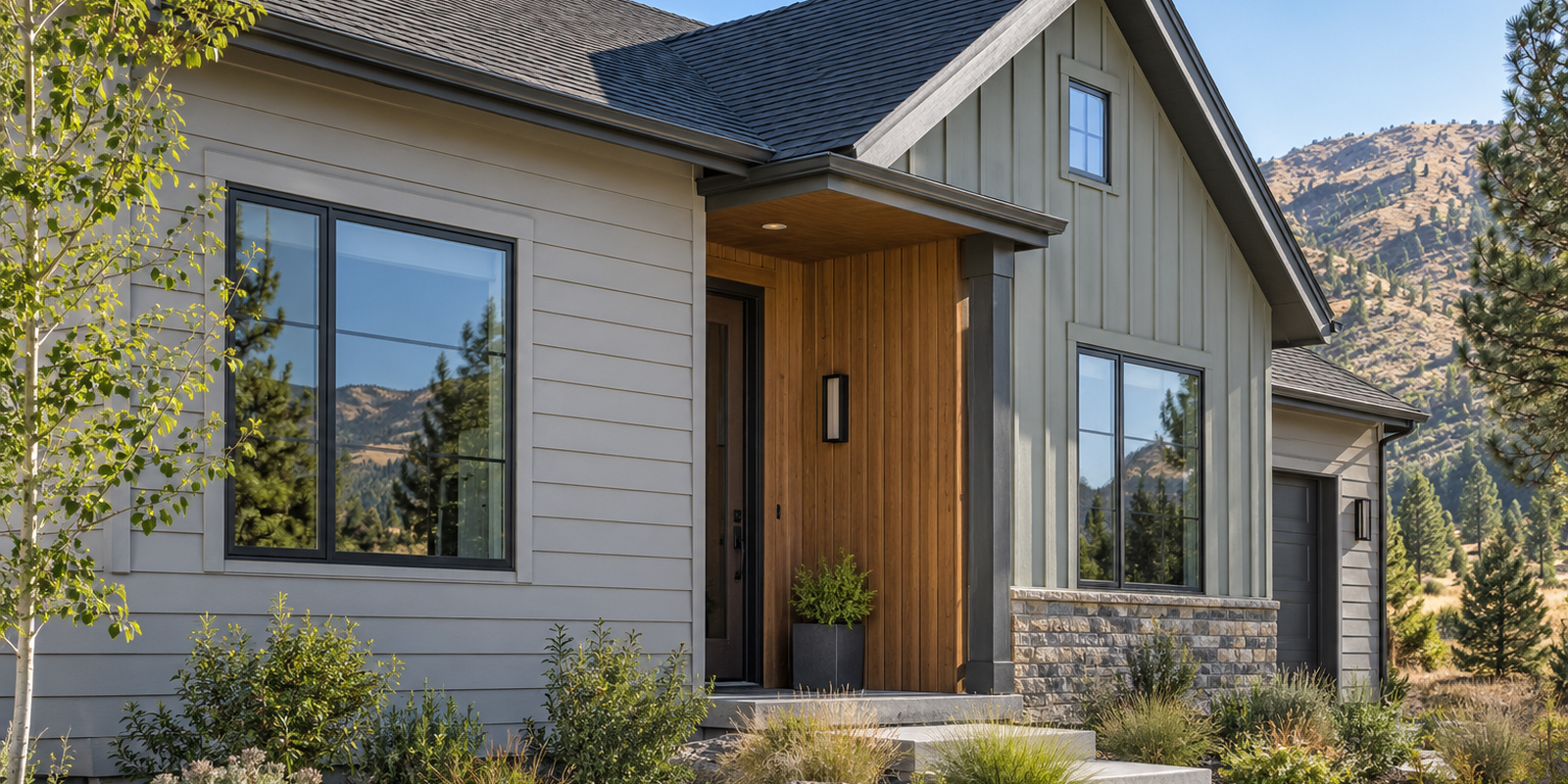
It’s no secret that Northern Nevada homes have to put up with a host of grueling weather patterns throughout the year. Cue blazing summer suns, strong winds, freezing winters, snow, rain, and fluctuating temperature swings that can wreak havoc on your home’s siding. Think of the siding as the front lines against these harsh elements, which is why choosing the right material is paramount to protecting your home for years to come.
The best siding for a Northern Nevada home not only needs to withstand the region’s demanding climate, but also look appealing and fit within your budget. The best options are usually fiber cement and high-quality composite siding because of their durability, weather resistance, and low maintenance requirements. But of course, there’s no single siding material that’s perfect for every home. It all depends on what matters most to you, whether that’s long-term durability, minimal upkeep, budget costs, or overall performance.
So in this guide, we’ll break down the best siding options to help you find the right fit for your home.
Why Northern Nevada’s Climate Matters When Choosing Siding
Northern Nevada’s climate isn’t exactly gentle on your home’s exterior, which means your siding has to withstand a pretty wide range of conditions throughout the year. This includes:
- Intense UV exposure and fading
- Hot, dry summers
- Cold winters and heavy snow
- Rapid temperature fluctuations
- Strong winds
- Moisture from rain and melting snow
- Regional wildfire concerns
It’s important to note, though, that siding designed for milder climates may not perform as well in Reno, Sparks, Carson City, and surrounding communities. This is because of the region’s extreme temperatures and fluctuations, which can potentially lead to faster fading, cracking, warping, and overall deterioration.
What Should Northern Nevada Homeowners Look for in Siding?
With Northern Nevada’s demanding climate in mind, what should you actually look for when choosing siding? Here are a few things that can make a massive difference in how well your siding performs over the years:
- Sun and fade resistance
- Wind resistance
- Resistance to moisture, warping, and cracking
- Fire resistance
- Energy efficiency
- Low maintenance
- Long lifespan
- Compatibility with the home’s architectural style
- Overall installation and ownership cost
The goal is to find siding that strikes the right balance between durability, appearance, performance, and cost for an exterior that looks good and lasts for many years to come.
What Are the Best Siding Materials for Northern Nevada Homes?
Fiber Cement Siding
Made from a blend of cement, sand, and cellulose fibers, fiber cement siding is tough enough to withstand the harsh weather conditions of Northern Nevada. The cement gives the material resistance to moisture and fire, while the cellulose fibers help provide stability and flexibility. Moreover, fiber cement is designed to resist common problems like fading, cracking, warping, rot, and insect damage.
Advantages:
- It’s built for the elements. Fiber cement offers excellent resistance to sun, wind, moisture, and temperature changes.
- Noncombustible and highly fire-resistant
- Resistant to insects and rot
- Available in styles that resemble traditional wood, as well as board-and-batten, vertical panels, Dutch lap, beaded siding, and many others
- Long expected lifespan, around 50+ years
Considerations:
- Higher installation cost than some alternatives, such as vinyl and engineered wood
- Heavy material that requires professional installation
- May eventually need repainting to keep it looking fresh
Best for: Homeowners who want durability, fire resistance, and long-term performance, and are willing to invest a little more upfront for a siding material that’s built to last.
Engineered Wood Siding
Love the look of real wood but not the idea of constantly babying it? Engineered wood siding may be your happy medium. It’s made from processed wood fibers and other materials for increased strength and weather resistance, while still having that warm, natural look that many homeowners love.
Advantages:
- Natural good looks. Engineered wood offers the authentic appearance of wood without looking overly manufactured.
- Lightweight. It’s generally lighter and easier to handle and install than fiber cement.
- Treated to resist moisture, insects, and fungal decay
- Available in many colors and styles, such as shake and shingle, board-and-batten, Dutch lap, and beaded siding
Considerations:
- Requires proper installation and moisture management
- May need painting or refinishing over time
- Fire resistance varies by product. If wildfire protection is a major concern, check the specific product’s fire rating and specifications before making your decision.
Best for: Homeowners who want the classic look of wood with less maintenance and more durability than traditional wood siding.
Composite Siding
Composite siding is a manufactured material that may combine polymers, wood fibers, minerals, and other durable components to create a strong, weather-resistant exterior. The exact makeup varies by manufacturer, so it’s important to look at the specifications of the individual product.
The big appeal? Less fuss, more staying power. Composite siding is designed to handle moisture, insects, sun exposure, and seasonal temperature changes while maintaining its appearance.
Advantages:
- Composite siding can help resist moisture-related damage, rot, and insect activity.
- Low maintenance. It generally requires less upkeep than traditional wood.
- Resistant to cracking, warping, and fading
- Available in wood-like finishes
- Performs well through seasonal temperature changes
Considerations:
- Quality and warranties vary considerably among manufacturers, because composite siding isn't a one-size-fits-all category. Manufacturers use all kinds of different materials, construction methods, finishes, and warranties, so compare products carefully.
- Can have a higher initial cost
- Product selection may be more limited. Depending on the manufacturer and availability, you may have fewer colors, profiles, or finishes to choose from.
Best for: Homeowners who want low-maintenance siding with serious weather resistance.
Vinyl Siding
Vinyl siding is a popular budget-friendly choice that offers plenty of curb appeal with relatively little upkeep. It’s made from durable plastic materials and comes in a wide variety of colors and textures, which makes it easy to find an option that fits your home.
Advantages:
- Generally affordable with lower upfront costs
- Low maintenance
- Available in many colors and profiles, including lap, board-and-batten, shake, shingle, and vertical siding
- No painting required. The color runs through the material, so there’s no need to repaint it every few years.
Considerations:
- UV exposure can cause fading, especially for lower-quality vinyl.
- May crack during very cold weather
- Can warp or buckle when exposed to excessive heat
- Wind performance varies. Vinyl's ability to withstand strong winds depends heavily on the product's quality, fastening system, and installation.
Best for: Budget-conscious homeowners who want affordable, low-maintenance siding that’s high in quality and specifically suited to Northern Nevada’s climate.
Traditional Wood Siding
Homeowners who love a warm, natural look may love traditional wood siding, as it has a distinctive character, with natural grain and textures. It can also be painted or stained in a wide range of colors, making it a fitting choice for rustic or cabin-style homes.
Advantages:
- Natural and distinctive appearance. Real wood brings warmth and character to your home’s exterior.
- Highly customizable. Wood can be painted or stained in countless colors to match your home's style.
- Complements classic designs like rustic, craftsman, and traditional home styles.
Considerations:
- Requires regular staining, painting, or sealing to protect it from deteriorating
- Vulnerable to moisture, insects, and rot
- Combustible unless specially treated, which is an important consideration in wildfire-prone areas
- Generally requires more maintenance than other options
Best for: Homeowners who prioritize the authentic beauty of natural wood and are willing to put in the ongoing maintenance to keep it looking its best.
Northern Nevada Siding Materials Compared
| Siding material | Durability | Maintenance | Fire resistance | Relative cost |
|---|---|---|---|---|
| Fiber cement | Excellent | Low to moderate | Excellent | Higher |
| Engineered wood | Very good | Moderate | Product dependent | Moderate |
| Composite | Excellent | Low | Product dependent | Moderate to high |
| Vinyl | Good | Low | Limited | Lower |
| Traditional wood | Moderate | High | Limited | Moderate to high |
Keep in mind that these are general guidelines, not guarantees. The exact performance and costs depend on the manufacturer, product line, home design, and installation requirements.
Which Siding Is Best for Your Priorities?
There’s no single siding material that wins every category, because the “best” one depends on your home, which part of Northern Nevada you live in, your budget costs, etc.
That being said, here’s a quick breakdown of the “best” siding materials for your priorities:
- Best overall durability: Fiber cement or high-quality composite siding
- Best fire resistance: Fiber cement
- Best wood appearance with less maintenance: Engineered wood or wood-look composite
- Best low-maintenance option: Composite or vinyl
- Best budget-friendly option: Vinyl
- Best natural appearance: Traditional wood
The bottom line: Think about what you want your siding to do first, then choose the material that checks the most important boxes.
What Siding Styles Work Well on Northern Nevada Homes?
Northern Nevada homeowners have plenty of siding styles to choose from, whether you prefer a classic look or want to give your exterior a more modern makeover. Here are some popular options that look good and perform well under harsh weather conditions:
- Traditional horizontal lap siding, which works well with a variety of home styles and gives your exterior a clean, classic appearance.
- Board-and-batten siding, which features wide vertical boards and narrower strips that work well on both rustic and modern homes.
- Vertical siding, which gives your home a taller appearance and a contemporary look
- Shake or shingle accents, which add texture and character and can be used on gables and entryways
- Mixed siding styles, which combine different profiles and textures for better curb appeal
And the best part? You don’t have to pick just one. Many homeowners combine different styles for a fresh, updated look that still feels cohesive with the home's architecture. The key is to choose complementary styles and use accents strategically, such as pairing traditional horizontal lap siding with board-and-batten accents on gables.
How Can New Siding Improve Energy Efficiency?
When properly installed, a quality siding system can improve your home’s overall energy efficiency. Here’s how:
- Reduces air infiltration. Proper installation can help minimize unwanted air movement through gaps and openings around your exterior walls.
- Creates an opportunity to add insulation or a weather-resistant barrier
- Helps maintain consistent indoor temperatures
- May reduce heating and cooling demands. Better insulation and reduced air infiltration can make it easier for your HVAC system to maintain a comfortable indoor temperature.
- Protects the structure from moisture that can damage insulation
Keep in mind, though, that siding alone isn't a magic solution for lowering energy bills. Things like insulation, windows, doors, roofing, and your HVAC system all matter as well since they work together to keep your home comfortable and energy efficient.
When Should You Replace Your Home’s Siding?
Siding is built to protect your home from harsh weather elements, but even the toughest materials eventually show signs of wear. That’s why it’s best to keep an eye out for the following warning signs that may warrant a replacement:
- Cracks, gaps, or loose panels
- Warping, buckling, or rotting
- Frequent repainting
- Severe fading or peeling
- Moisture stains or mold
- Higher heating and cooling costs
- Insect damage: Holes, tunnels, or other signs of pests can indicate damage to wood or other vulnerable materials.
- Wind, hail, or debris damage
- Interior water damage near exterior walls
Not sure whether you're looking at a few repairs or a full siding replacement? A professional exterior inspection can help identify the extent of the damage and determine the next steps that are right for you and your home.
Why Professional Siding Installation Matters
Even the best siding material can fall short if it isn't installed correctly. That’s why proper installation is just as important as choosing the right product, especially in Northern Nevada.
We recommend a professional siding installation, which helps to ensure:
- Correct fastening for wind resistance
- Room for expansion and contraction, because siding needs adequate space to expand and contract as temperatures change.
- Proper flashing around windows, doors, and other penetrations to help keep water from getting behind the siding.
- Effective moisture drainage. A properly installed siding system helps direct water away from the home's exterior and underlying structure.
- Manufacturer warranty compliance
- A clean, consistent appearance. Professional installation makes sure that panels, seams, corners, and trim are properly aligned for a polished, finished look.
Cutting corners during installation can lead to premature damage and more costly repairs down the road, which is why great siding deserves a great installation.
What Is the Best Siding for Northern Nevada?
So which siding comes out on top? Well, fiber cement is considered to be the strongest all-around choice for Northern Nevada homeowners who prioritize durability and fire resistance. But that doesn’t mean it’s for everyone. Composite siding might be a better option for those who want impressive weather resistance with less maintenance, while engineered wood has a beautiful natural wood appearance with strong durability compared to traditional wood.
Ultimately, the best siding for your home depends on many factors, including your location, budget, home style, maintenance preferences, and performance priorities. And at Mountain Vista Roof Systems, we’re here to help make that decision easier and find a siding option that makes sense for your home and goals. Schedule a free siding consultation today and take the first step toward a stronger and better-looking home exterior.
Frequently Asked Questions
What type of siding lasts the longest in Northern Nevada?
Fiber cement and high-quality composite siding are considered to be the longest-lasting options for Northern Nevada homes. Fiber cement, in particular, can usually last 50 years or longer, while some composite products are designed to last for several decades. The key is to choose a quality siding product that can handle intense sun, temperature swings, wind, moisture, and other harsh weather elements.
Is fiber cement siding a good choice for Reno homes?
Absolutely. Fiber cement is one of the strongest all-around siding options for Reno and the surrounding Northern Nevada area. It offers excellent resistance to UV exposure, moisture, insects, cracking, warping, and fire resistance and comes in plenty of styles and finishes.
What siding provides the best wildfire protection?
Fiber cement siding is generally one of the best choices for homeowners concerned about wildfire exposure. Unlike combustible wood siding, fiber cement is noncombustible and can provide excellent resistance to fire. However, siding should be considered alongside windows, vents, doors, landscaping, the roof, and other parts of your home’s exterior for full wildfire protection.
Does siding fade in Nevada’s intense sunlight?
It can, especially if you choose a lower-quality product or finish. Northern Nevada's intense UV exposure can cause some siding materials and finishes to fade, discolor, or deteriorate over time. That’s why it’s best to look for siding that’s specifically designed with UV and fade resistance.
Can new siding make a home more energy efficient?
It can help, but don't expect your siding to magically lower your energy bills. Essentially, a properly installed siding system can help reduce air infiltration and protect insulation, which can help your home maintain more consistent indoor temperatures and prevent your HVAC system from working harder than necessary.
Is it better to repair or replace damaged siding?
That depends on the extent of the damage. A few cracked, loose, or damaged sections may be repairable, while widespread cracking, warping, rot, moisture damage, severe fading, or recurring problems could warrant a replacement. That’s why we recommend a professional inspection to help determine whether your home needs a targeted repair or a full exterior upgrade.
About the Author: Aaron Galloway
Aaron Galloway, founder of Mountain Vista Roof Systems and a Nevada native, provides homeowners across Northern Nevada with expert roofing, gutters, and skylight solutions, using durable materials as a Malarkey Premium Installer.